DEEP LEARNING & EXPLORATORY DATA / COIT29225
Neural Network Analysis
Comparing dense neural-network architectures while using PCA and clustering to understand difficult datasets.
A two-problem experimental study combining housing-price regression and olive-oil classification with data exploration, PCA and K-means.
- Python
- TensorFlow
- Keras
- PCA
- K-means
- Core prediction tasks
- 2
- Recorded olive-oil classification
- 99.2%
- Supporting data exploration
- PCA + K-means
01 / PROJECT EVIDENCE
Actual results, not mock-ups.
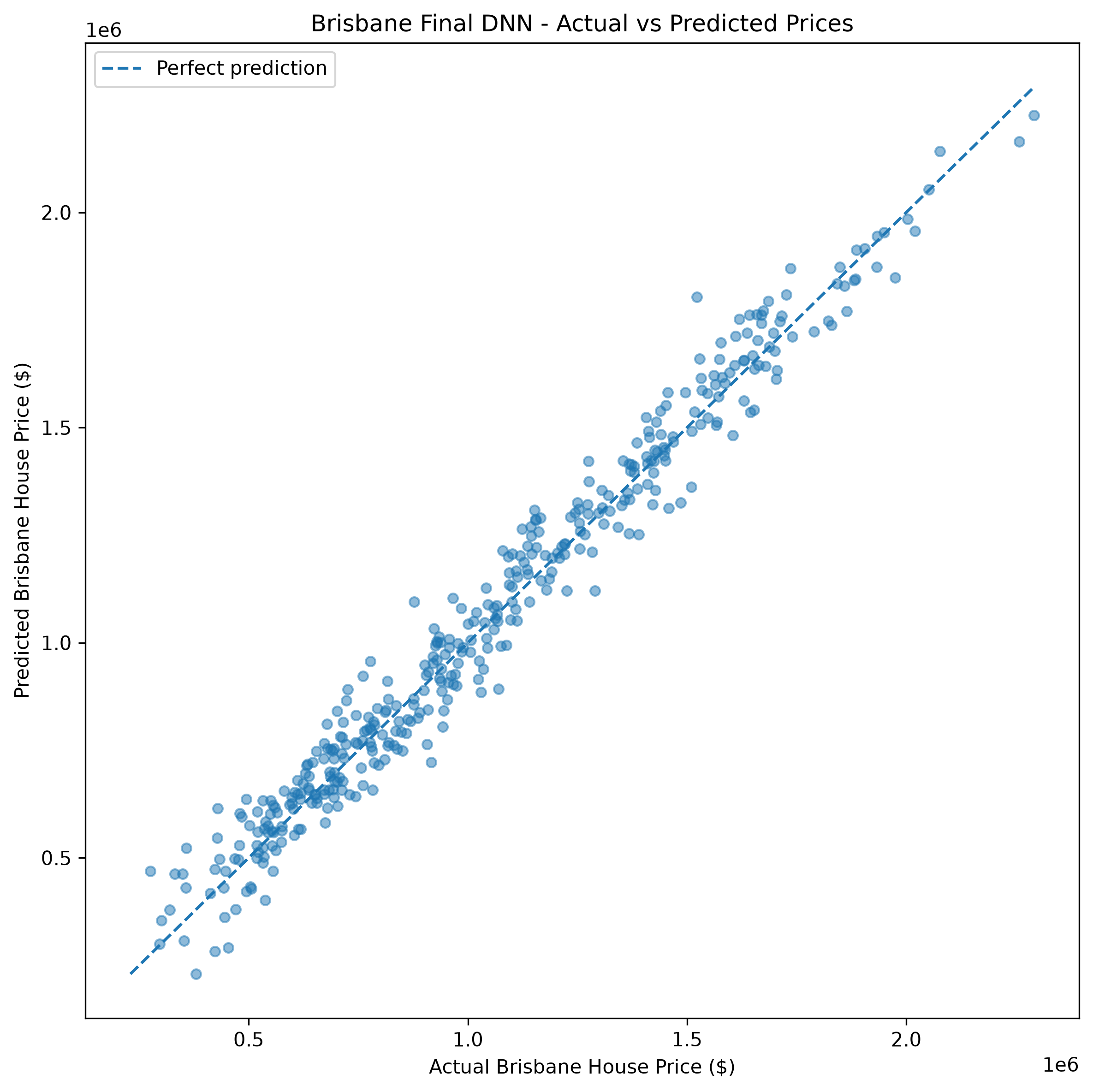
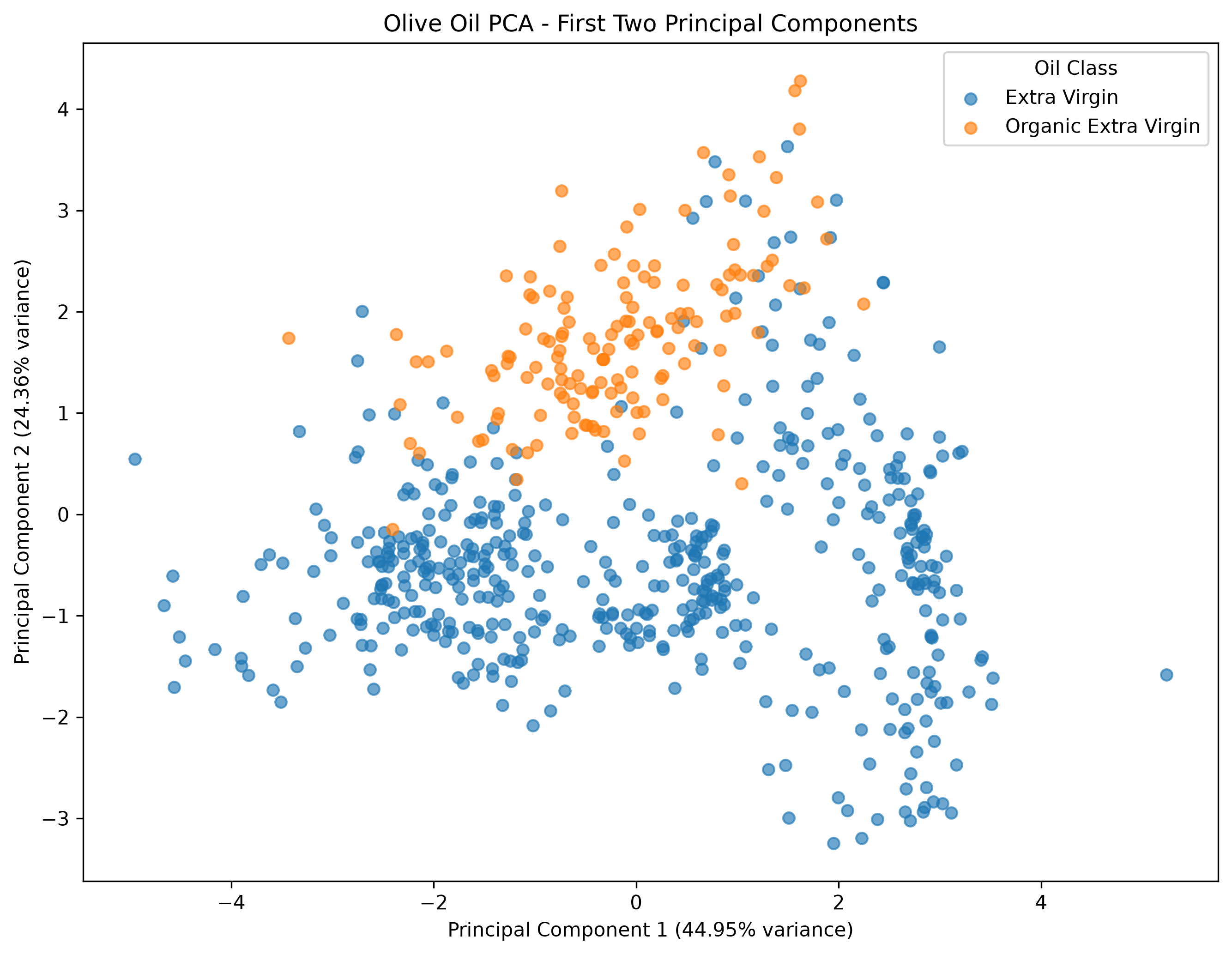
These figures are copied directly from the public GitHub repository and are presented with context.
02 / PROBLEM
The engineering question.
Neural networks can fit data without giving much insight into feature structure. The assignment explored different model configurations alongside interpretable exploratory techniques.
03 / METHOD
What I built and evaluated.
- Prepared and experimented with California and Brisbane housing datasets as regression tasks, comparing measured predicted-versus-actual prices.
- Compared architecture depth, batch sizes, optimisers, learning rates and epochs, retaining output CSVs and training error curves.
- Examined olive-oil classification using a deep neural network, including a reported 99.2% evaluation accuracy on 125 samples.
- Used principal component analysis and K-means plots to inspect distributions and class separation beyond supervised scores.
04 / MEASURED FINDINGS
What the evidence shows.
- Experiment results and prediction plots are saved in the public repository for review, rather than relying only on descriptive claims.
- The olive-oil experiment reports 99.2% accuracy on its recorded 125-sample evaluation; the result is tied to that dataset and configuration.
- PCA revealed overlapping but distinguishable group structure, demonstrating why exploratory analysis matters alongside classifier accuracy.
05 / LIMITATIONS
Where the claims stop.
The experiments use assessment-scale datasets and recorded splits. Their metrics are not deployment or generalisation guarantees; PCA projections simplify high-dimensional relationships.
06 / EXPERIMENT INTERPRETATION
Separate predictive performance from data exploration.
| Task | Approach | Reported evidence |
|---|---|---|
| House-price prediction | DNN regression | Predicted vs actual plots and regression experiment results |
| Olive-oil classes | DNN classification | 99.2% recorded accuracy on 125 evaluated samples |
| Feature structure | PCA and K-means | Visualised distributions and cluster overlap |
Architecture depth, learning rate, optimisers and training schedules were compared in recorded experiments. PCA and K-means provide exploratory context, not independent proof of generalisation. A high classification score on a small evaluation set must always be accompanied by its dataset and split.
Engineering lesson: Regression fit, classification accuracy and unsupervised structure answer different questions; don't collapse them into one headline metric.
PROJECT SOURCE
Inspect the implementation.
See the original code, data-handling choices, documented experiments and repository instructions.